




A new shuttling system is reshaping the Middle East oil market, as producers seek to keep exports flowing despite the escalating regional conflict. The question now is whether this complex, expensive process is a stopgap measure or the global energy market’s new normal.
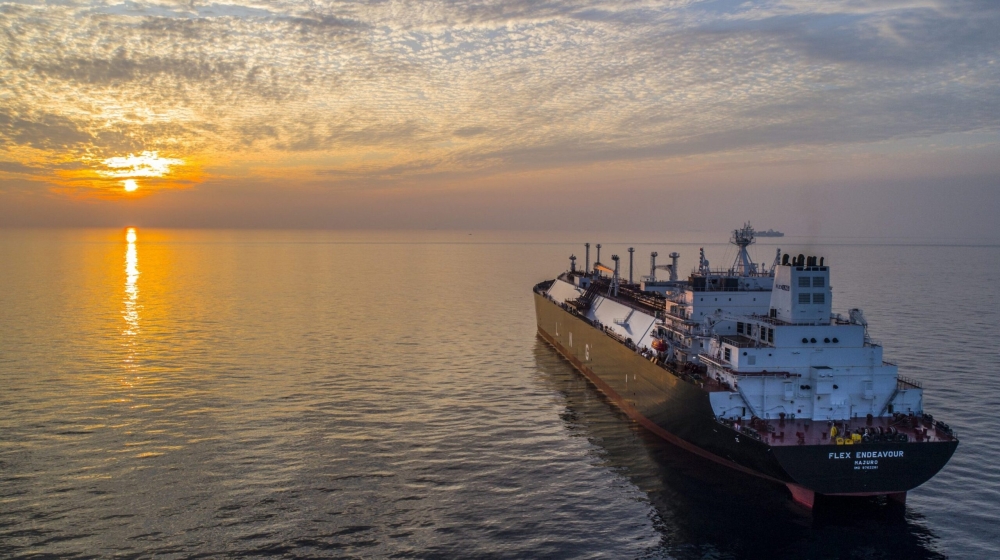
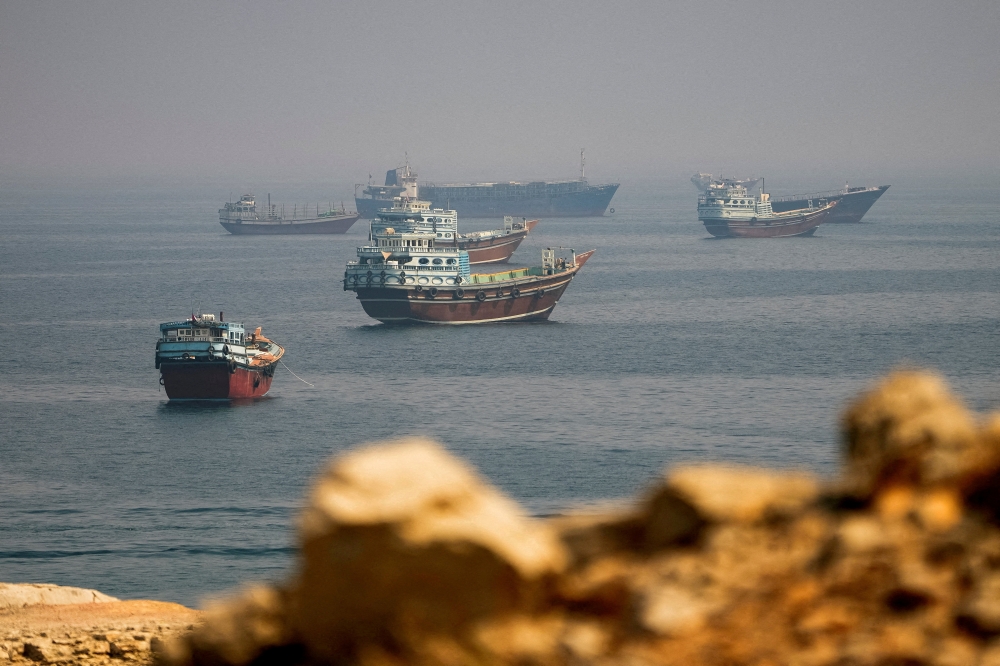
Several miles off Oman's coast, south of the Strait of Hormuz, rows of tankers lie at anchor. Many sit alongside each other, connected by ropes and hoses as they transfer crude from one vessel to another, creating a floating bridge between the Middle East's oilfields and the global market.
Ship-to-ship (STS) transfers have become a vital lifeline for Gulf producers as they adapt to the disruptions caused by the Iran war, now entering its seventh month. Once loaded, a tanker disconnects and heads for its destination, typically a refinery in Asia. The "mother vessel” then returns to the Gulf via Hormuz to reload and repeat the process.
The system cuts the distance any one ship must travel, reducing the risk of transiting the strait, even as an increasing number of tankers are crossing through a narrow corridor along Oman's coastline under US naval protection, with their navigation systems switched off.
Exports through Hormuz have reached around 6.5 million barrels per day (bpd) so far in September, the highest since the brief spike after the June ceasefire, according to Kpler data.
This operation is a testament to the energy industry's remarkable ability to adapt to supply shocks. Yet, it is also a sign of how costly and complex it has become to move oil out of the world's most important exporting region.
HORMUZ STANDOFF
Before the US-Israeli conflict with Iran erupted in February, the Strait of Hormuz handled roughly a fifth of global oil consumption. Iran's blockade brought traffic to an abrupt halt, however, forcing producers to divert flows where possible and cut output.
Many shipowners balked at sending vessels through an active conflict zone, and the few willing to take the risk demanded unprecedented premiums.
The energy industry, however, rarely stands still.
Faced with a shortage of available tankers, Abu Dhabi National Oil Company (ADNOC) developed the STS workaround. Instead of using vessels to complete round-trip voyages of several weeks to buyers in Asia, it began employing them in April as shuttle tankers, transporting crude from Gulf terminals to the safer waters of the Gulf of Oman. There, the cargoes could be transferred to larger ships for the onward journey.
The strategy maximised the use of a limited and expensive tanker fleet and allowed at least some vital exports to continue.
In fact, UAE oil exports in September are set to reach 3.6 million bpd, higher than the 2025 average of 3.4 million bpd.
ARAMCO’S IN, TOO
What began as an emergency response has evolved into a sizable new industry.
Saudi Aramco is now increasingly relying on STS operations as disruptions to Red Sea export routes reduce the effectiveness of the kingdom's alternative outlet.
In recent weeks, Yemen’s Iran-backed Houthi forces have been tightening their grip on the Bab el-Mandeb Strait at the southern entrance to the Red Sea. And Iran-backed militants in Iraq struck Saudi Arabia's East-West pipeline on September 10, cutting off roughly 4% of global oil supplies that had been flowing to international markets via the Red Sea port of Yanbu.
That confluence of events pushed Brent crude to over $108 a barrel last week before the Saudis began informing buyers that they would keep shipments flowing through STS transfers via the Omani route.
Other regional producers have also adopted the STS method.
According to Kpler, around 2.5 million bpd of crude are expected to be loaded via STS transfers in the Gulf of Oman in September alone, compared with 1.4 million bpd in August. That equates to roughly 40% of the volumes currently moving through Hormuz. STS was rarely used before the war.
ADAPTATION, NOT PARALYSIS
The emergence of this floating logistics network has helped prevent a far more severe supply shock, but it comes at a steep price.
Benchmark freight rates for a very large crude carrier (VLCC) transporting Gulf crude to China have surged in recent months to above $30 per barrel, by far the highest level on record, according to LSEG data. With current crude prices around $105, freight now represents over a quarter of the cost, compared with 2% to 3% before the war.
Every additional transfer requires more ships, more time and more money, adding to the costs facing global oil markets.
Producers have been forced to offer deeper discounts on their crude to keep exports competitive, absorbing part of the increased transportation costs themselves.
The expansion of STS transfers in the Gulf has also limited the availability of tankers, pushing up global freight rates dramatically.
"We are witnessing one of the biggest wealth transfers from oil producers to tanker owners,” said Keshav Lokhiya, CEO of HiLo Analytics.
Fundamentally, the global energy market is adapting to today’s heightened geopolitical risk rather than being paralysed by it. But the Middle East's oil trade is becoming increasingly inefficient, dependent on a patchwork of military escorts, temporary transfer hubs and alternative routes that were never designed to handle such volumes.
Oman Observer is now on the WhatsApp channel. Click here